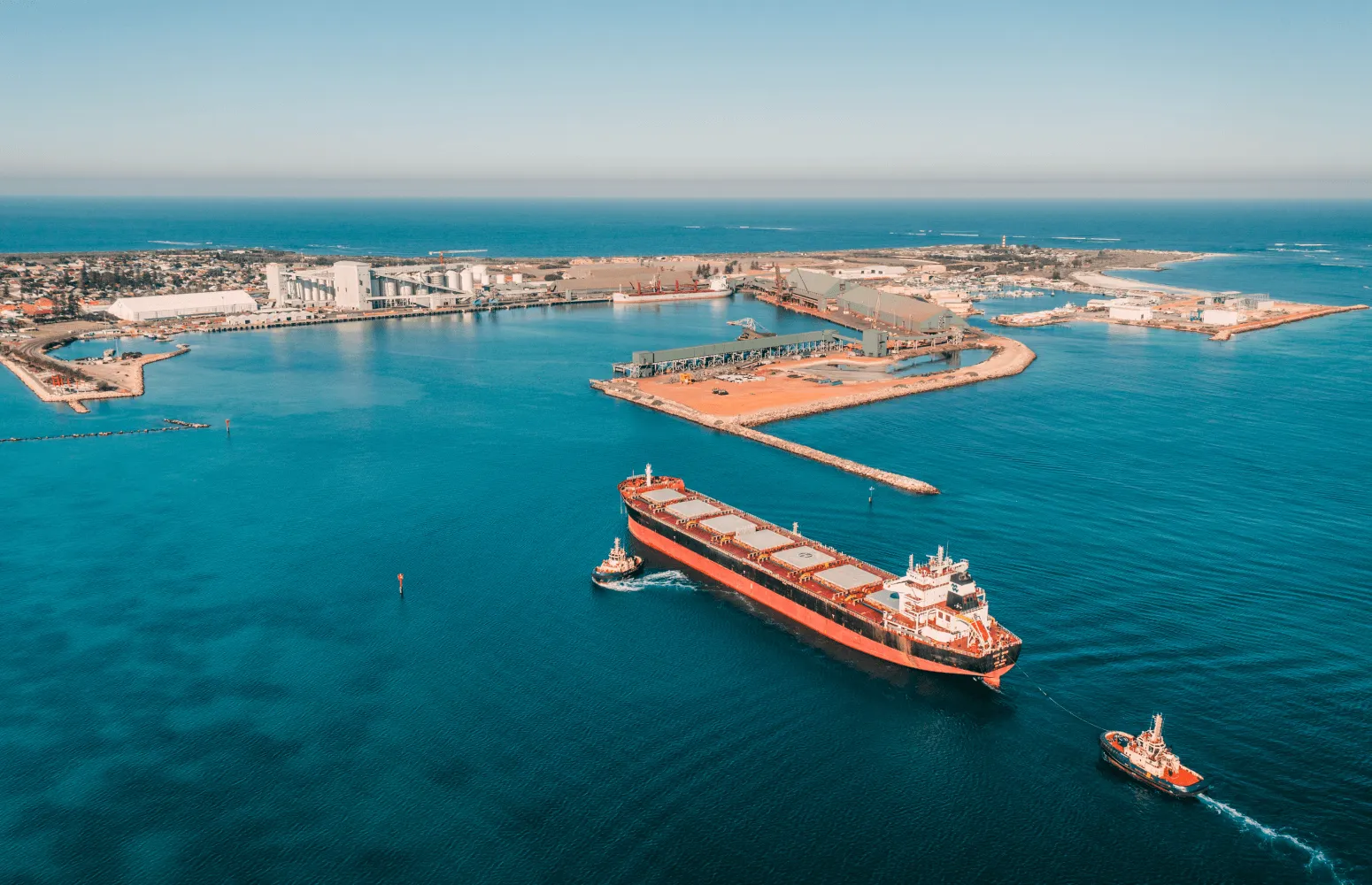
Beacon’s AI Supply Chain Workspace turns fragmented data into intelligent supply chains - focusing on reducing unnecessary spend across the supply chain.

The best software to prevent supply chain disruptions is not a new tool. It is connected data.
By the Beacon team. Last updated July 2026. Beacon is the AI Supply Chain Workspace that connects fragmented shipment, contract and cost data into one place.
The short answer: The five capabilities a supply chain team needs to prevent disruptions are free-time monitoring, trusted lead-time data, carrier and supplier performance tracking, freight contract intelligence, and shared operational transparency. Most advice says to buy a separate product for each. In our experience that is the wrong instinct. Adding five more tools tends to deepen the real problem, which is that your data is fragmented across systems that do not talk to each other. The capabilities matter. The number of tools rarely does. What tends to prevent disruptions is connecting the data you already have, so these five capabilities share the same information and reinforce each other.
Supply chains are genuinely hard to understand, and no two are wired the same way, so treat this as an argument and a starting point rather than a formula. It is the case this piece makes, and it runs against most of what you will read on the subject.
Why does adding more supply chain software make disruptions worse?
Search for the best software to protect your supply chain in 2026 and you get the same list everywhere: a shipment tracker, a risk platform, a rates benchmark, another dashboard. Five products, five logins, five contracts, five more places for your data to sit and never quite meet.
An honest caveat first: no dashboard captures the whole truth of a live global network, and anyone who tells you otherwise is selling something. That difficulty is not a reason to give up on a clearer picture. It is the reason bolting on more tools so rarely helps.
Here is the pattern we see. Every tool you add solves one slice of the picture and tends to deepen the issue underneath: your data ends up more fragmented, not less. The arrival time lives in one system, the contract terms in another, the cost exposure in a third, and no single view sees all three at once. Disruptions are rarely caused by a shortage of tools. More often they are caused by data that cannot see itself.
So "which software should I add" is the wrong question. The better one is "what capabilities do I need, and how do I get them working from the same data." The second is what actually prevents disruptions.
What are the five capabilities a supply chain tech stack actually needs?
The five capabilities below stop problems before they reach the P&L. Read them as five jobs your data has to do, not five products to buy. Each is explained in detail after the table.
CapabilityThe job it doesWhat it costs you when your data is fragmentedFree-time monitoringWatches each container's detention and demurrage clockInvoices you only see after the charge has accruedTrusted lead-time dataShows which lanes are genuinely reliableCash tied up in safety stock you do not needPerformance trackingRecords carrier and supplier reliability from your shipmentsService reviews argued on opinion, not evidenceContract intelligencePuts your rates, terms and performance in one placeRenewals negotiated from weakness and invoice errors left unrecoveredShared operational transparencyGives the whole team one live pictureOne person as the bottleneck and the team chasing updates
1. How do you stop detention and demurrage charges before they happen?
You stop them two ways, and only one is operational. The first is monitoring each container's free-time clock against its live arrival time, so an alert fires while you can still ring the haulier or request more free days. According to the U.S. Federal Maritime Commission, nine major carriers collected roughly $15.4 billion in detention and demurrage over five years, and demurrage commonly runs $100 to $200 per container per day, so a single missed window becomes a four-figure charge.
The second lever is structural, and most teams miss it. If you know how often you run past free time on a given carrier and lane, how many days you typically lose, and how much you are actually charged for, you can renegotiate the free-time allowance itself, especially where that carrier has slipped on schedule reliability elsewhere. Winning a single extra free day on a lane you run constantly is worth more than any amount of after-the-fact firefighting. That is not a visibility feature. It is your own history turned into leverage. Prevention beats recovery, because a charge that never accrues is one you never have to claim back.
2. Why are you carrying too much safety stock?
Safety stock exists for good reasons. Demand moves, supply slips, and you need cover. But most businesses hold more than the risk actually warrants, and the reason is not caution. It is that they do not trust their own lead-time data, so they buffer against the worst case on every lane, including the ones that run reliably week after week. That excess is cash sitting on a shelf. Clean historical transit data for the lanes you run lets you size cover to each lane's real reliability instead of applying a worst-case buffer everywhere, and free up the working capital tied down on the routes that never actually let you down.
3. How do you hold carriers and suppliers accountable?
You hold them accountable with your own performance record, not their version of events. Ask most teams which carrier is most reliable on a given lane and the answer is a feeling, not a figure. A running scorecard built from your own shipments, on-time performance by carrier, by lane, by forwarder, over time, is what lets you walk into a service review with evidence instead of anecdotes. Without it, every conversation happens on the provider's terms.
4. How do you negotiate a better freight contract?
You negotiate from your own data. Carriers come to freight contracts with very good data; most of their customers come with almost none, and that asymmetry costs money on every renewal. As Beacon CEO Fraser Robinson puts it, you cannot negotiate from a position of strength when you do not have your own data. Contract intelligence keeps your rates, terms and actual performance together, so at renewal you can show exactly where a carrier underperformed and what it cost you, lane by lane, and price that into the rates you agree. The same record lets you audit invoices and recover what was billed in error.
5. How do you stop one person becoming the bottleneck?
You give the whole team one live picture to work from. The hidden tax in most operations is translation: one person becomes the human interface between systems, forwarders and the business, endlessly re-keying and re-explaining the same status. It does not scale, and it breaks the moment that person is on holiday. Shared operational boards let your team, your warehouse, your finance function and external partners all see the same thing at once, so people make decisions instead of chasing updates.
Why won't five separate tools deliver these five capabilities?
Because all five depend on the same underlying data: your arrivals, contracts, costs and performance history. Split that across five products and each capability is weaker for it, because none can see what the others hold. The fragmentation that caused the disruptions simply grows.
Connect the data once and each capability makes the others sharper: performance data strengthens the contract negotiation, contract terms feed the free-time alerts, lead-time history informs both inventory and supplier reviews. That compounding effect is the real prize, and it is very hard to get from five disconnected systems.
Does adding AI fix the problem?
Not on its own. MIT's NANDA research found that around 95% of enterprise AI pilots deliver no measurable return, and in supply chains the reason is almost always the same: the model is reasoning over fragmented, unreliable data. An AI that tells you a container is late is answering a question you already knew the answer to. The intelligence that actually prevents disruptions only appears once the data underneath is connected. AI is a multiplier on good data, not a substitute for it.
Our own Flying Blind research, from conversations with 50+ senior supply chain leaders, kept surfacing the same split: the firefighting happens in operations, the cost surfaces in finance, and nobody has joined the two, because the data that would join them lives in separate tools.
What if you don't have good data to begin with?
This is the most common worry we hear, and it is fair. Plenty of good operations run on a handful of spreadsheets and a lot of institutional memory.
But "no data" almost always means the data exists and is scattered: in carrier portals, email threads, spreadsheets and people's heads, never pulled together. Our Flying Blind research found leaders who could not say how many ocean shipments they were managing at a given moment, not because the information did not exist, but because no single place held it.
The honest exception is a business starting from scratch, and even then it is more encouraging than it feels. You do not need a pristine data warehouse to begin. You start capturing what already flows through your operation, and within a few months a usable picture forms and sharpens on its own. That is the point of connecting on top of the systems you already run rather than replacing them: you meet the data where it is, however messy, instead of waiting for a perfect version that never arrives. Nobody has clean data on day one. The teams that pull ahead start with what they have.
So what should you actually add to your stack?
Not a sixth tool. One place where those five capabilities finally share the same data.
That is what Beacon, the AI Supply Chain Workspace, is built to do. It sits on top of the systems you already run, brings your fragmented shipment, contract and cost data into one workspace, and turns that connected picture into decisions your whole team can act on. No rip and replace, no big-bang IT project. You start with the data you already have.
You will not prevent every disruption, because some delay is genuinely outside anyone's control. But the majority is preventable once the data is joined up. If your stack has quietly grown into five tools that do not talk to each other, that is the shift worth making. We'd love to talk.
Frequently asked questions
What is the best software to prevent supply chain disruptions?
There is no single product that prevents disruptions. What prevents them is connecting the data you already have so that five capabilities work together: free-time monitoring, trusted lead-time data, carrier and supplier performance tracking, contract intelligence, and shared operational transparency. A workspace that unifies fragmented shipment, contract and cost data delivers all five from one source rather than five disconnected tools.
Do I need separate tools for tracking, risk, rates and reporting?
No. Buying a separate product for each capability recreates the underlying problem, which is fragmented data. The capabilities matter; the number of tools does not. Getting them working from one connected data set is what prevents disruptions.
How do connected supply chain data and detention and demurrage relate?
Detention and demurrage charges accrue when a container sits past its free time and nobody acts in time. Connecting live arrival data with each container's free-time terms lets a system alert you before the charge accrues, turning an unmanaged cost into a controlled one.
The Monthly Freight Briefing · October 2026